Review Essay
Lynne Rienner
2024
311 pages
Pen & Sword
Military 2023
240 pages
Oxford University Press
2024
432 pages
A Call to Action: Lessons from the War in Ukraine for Americans
Reviewed by Dr. John A. Nagl, General John J. Pershing Professor of Warfighting Studies, Department of Military Strategy, Planning, and Operations, US Army War College
©2026 John A. Nagl
The ongoing war in Ukraine is important not just because it is the largest conflict in Europe since 1945 but also because of what it reveals about Vladimir Putin’s quest to restore a Russian empire in Eastern Europe. The clear and present danger has spurred a dramatic change in European energy and defense policy and arguably initiated a new Cold War in Western Europe in addition to the hot war in Ukraine.
How did we get here, and what does it mean for the future of conflict? Three books provide complementary perspectives on those questions. Considered together, they present a commendable attempt to understand the evolving character of war in the twenty-first century.
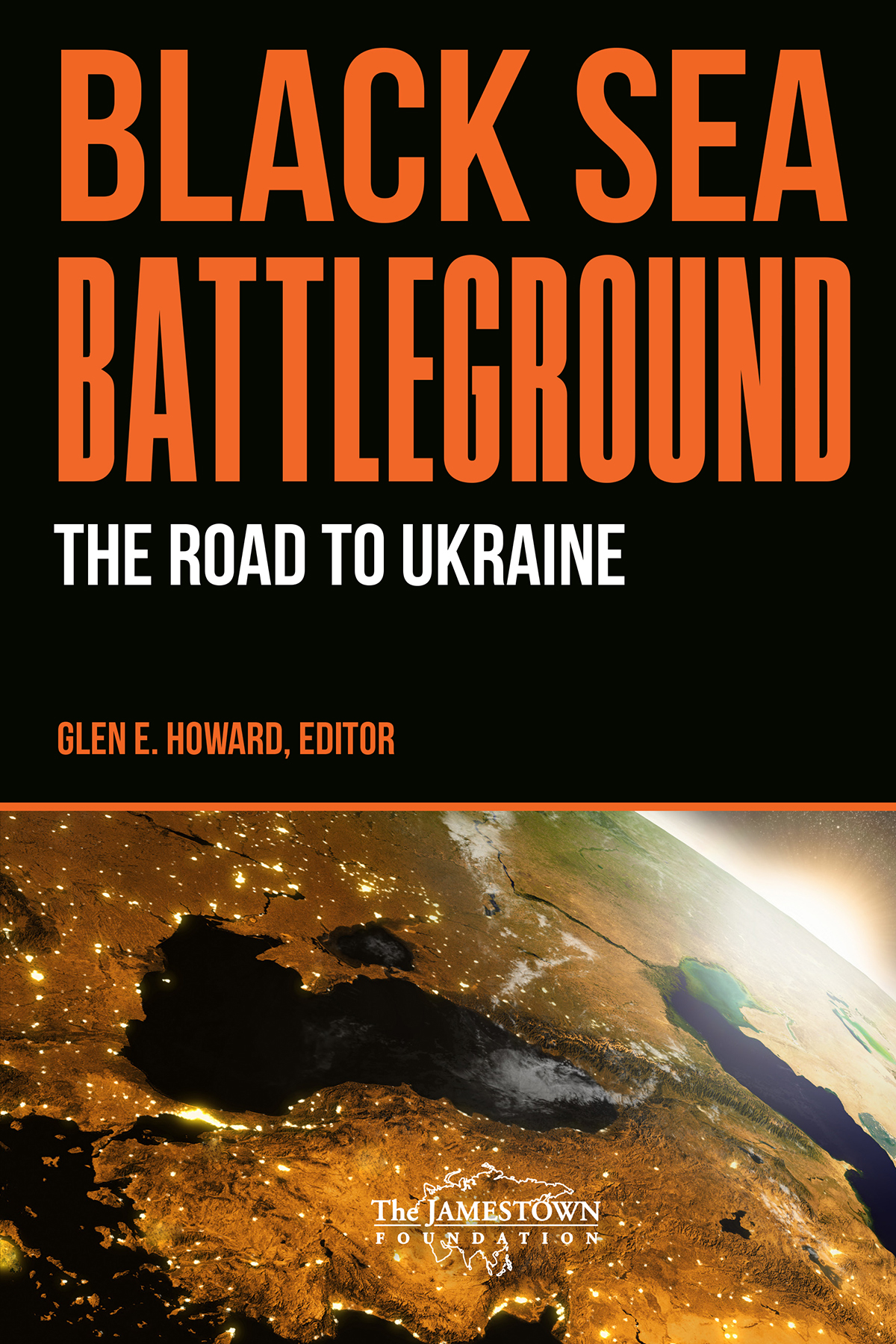
Black Sea Battleground: The Road to Ukraine
Edited by Glen E. Howard
We begin with Black Sea Battleground: The Road to Ukraine, a collection of 10 essays, helpfully organized by the date of writing, as depicted on the first page of each chapter. Half were written before the Russian reinvasion of Ukraine in February 2022, half after. All were sponsored by the Jamestown Foundation, which was initially founded in 1984 to support Soviet defectors and focuses on the influence of Russia on Eastern Europe. Glenn E. Howard, who edited the volume, was president of the Jamestown Foundation and is a longtime Russia watcher.
The Jamestown Foundation is to be commended for its focus on the geopolitically critical Black Sea region prior to the Russian reinvasion of 2022 and for the diverse voices it elevates in this unusual volume. The essays span the waterfront, beginning with a fascinating examination of the failures of Ukraine’s military reforms since the Russian invasion of Crimea in 2014 by former British Army officer and longtime Ukrainian Ministry of Defense adviser Glen Grant, titled “Seven Years of Deadlock.” Grant predicts many of the challenges other observers have since noted in the transformation of Ukrainian armed forces from a post-Soviet model to a Western model. Also notable is retired Ukrainian Navy Captain Andrii Ryzhenko’s examination of the security of Ukraine’s internal waterways, another study—written before but completed weeks after the Russian reinvasion—demonstrating the value of professional military study that, if properly acted on earlier, might have changed the course of the ongoing war.
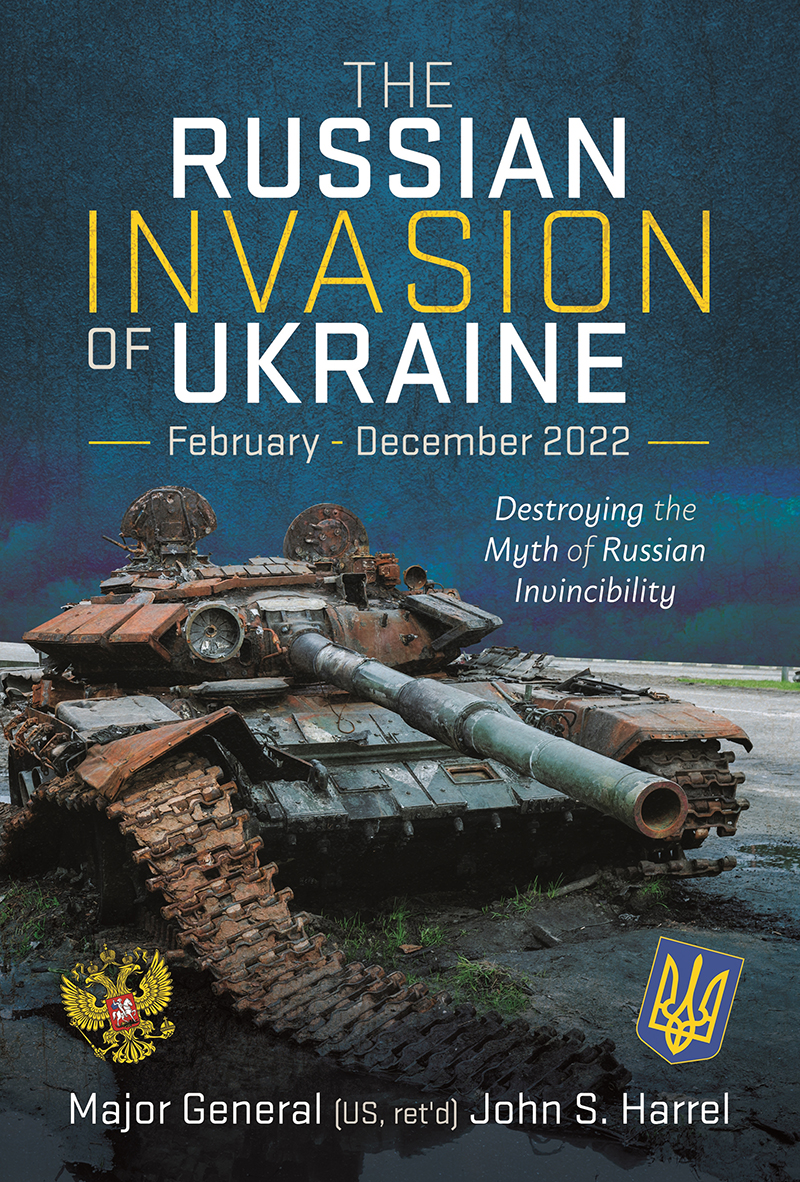
John Harrel would have benefited from reading Black Sea Battleground. In an impressive feat of research and writing, Harrel published his book on the first 11 months of the Ukrainian war before Black Sea Battleground saw print. Harrel, a retired major general in the California Army National Guard, served repeated tours in the “Partnership for Peace” program with Ukrainian forces and led Ukrainian troops in the NATO peacekeeping force in Kosovo in 2005.
The Russian Invasion of Ukraine: February–December 2022: Destroying the Myth of Russian Invincibility
by John S. Harrel
Drawing on experience and buoyed by a clear love for Ukraine’s armed forces, his 2023 book The Russian Invasion of Ukraine: February–December 2022: Destroying the Myth of Russian Invincibility documents the failures of Russian arms. The book is built from “a series of essays written for friends and family explaining details and implications of Russia’s unlawful invasion of Ukraine on 24 February 2022” (xiii) and draws upon Harrel’s contacts inside Ukraine from his years of working with Ukrainian troopers. He notes correctly that “there was literally a daily flood of data from the war. Using modern technology, civilians and soldiers from both sides posted details about battles and skirmishes” (xv). Harrel digests his military experience, news accounts, and YouTube videos to tell the story of the war from a distance in almost real time.
Harrel’s analytical skills are impressive, and his conclusions on the first year of the war stand the test of time; he notes correctly in his terrific concluding chapter “Lessons Learned and the 2023 Offensives,” “t the close of 2022 Russia and Ukraine were locked in a war of attrition” and attributes the deadlock, also correctly, to “Russia’s failure to achieve air superiority over Ukraine” (179). American strategists should ponder this lesson deeply; there is no certainty, and, in fact, little likelihood, that the United States would enjoy air superiority in a fight with China over Taiwan. An updated version of Harrel’s final chapter, published as an article in a journal like Parameters, would be of immense value. Harrel concludes, “s long as Putin and the siloviki [Russian national security personnel] and their successors are determined to politically and economically dominate the former Soviet Republics, there will be no lasting peace” (193).
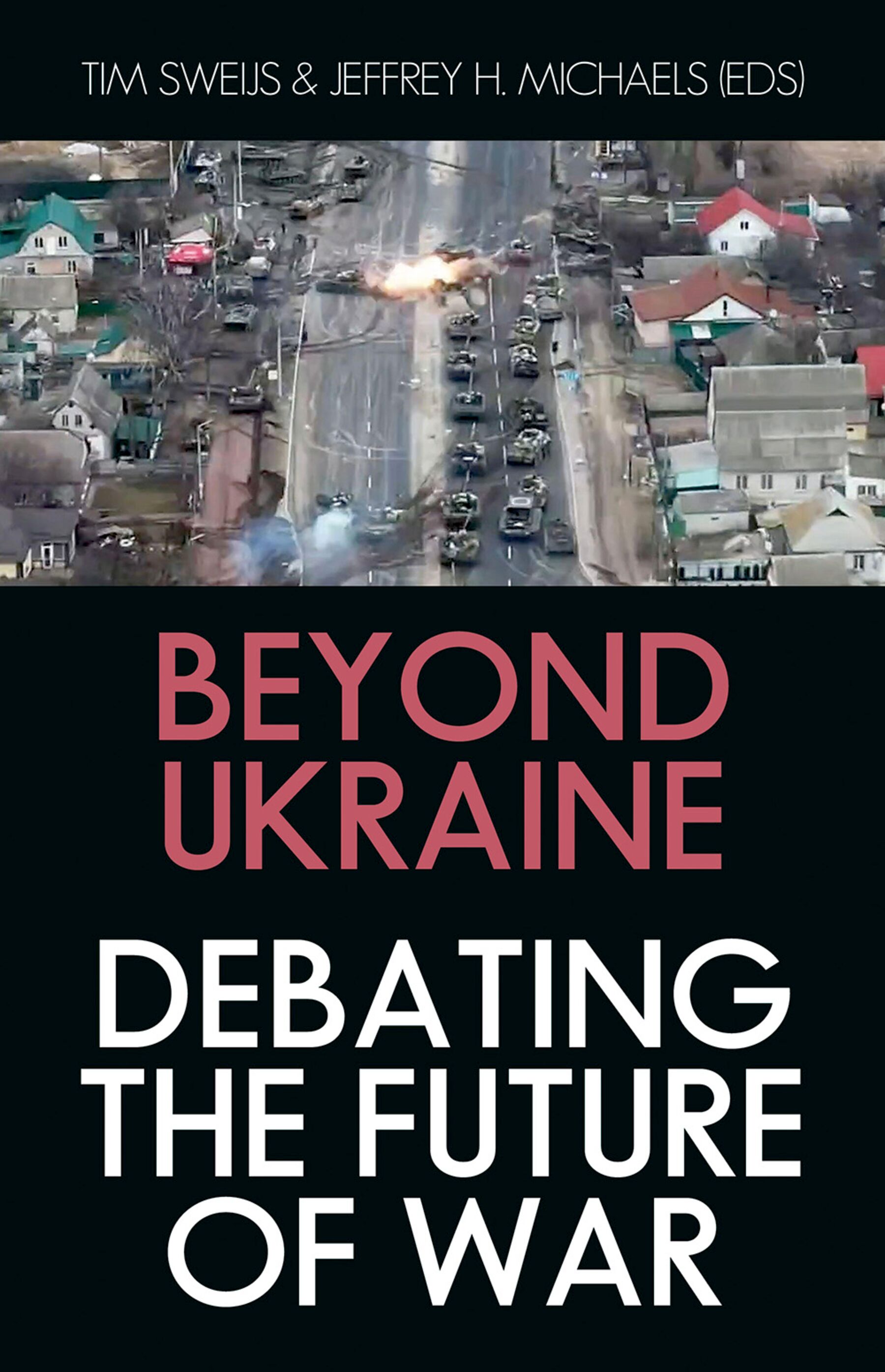
Beyond Ukraine: Debating the Future of War
Edited by Tim Sweijs and Jeffrey H. Michaels
The third volume, Beyond Ukraine: Debating the Future of War, is a collection of papers presented at The Future of War Conference in Amsterdam, October 5–7, 2022, edited by Tim Sweijs, director of research, The Hague Centre for Strategic Studies, and Jeffrey H. Michaels, The Barcelona Institute for International Studies. Attendees included many of the most interesting living thinkers on the future of war, including Antulio J. Echevarria II, then–editor in chief of the US Army War College Press; Israeli historian Azar Gat; National Defense University’s Frank G. Hoffman; T. X. Hammes of the Institute for National Strategic Studies; David Betz of King’s College London; Audrey Cronin, of the Carnegie Mellon Institute for Strategy and technology; and historian and political Scientist Beatrice Heuser. Maddeningly, and oddly, from a press of Oxford’s repute, the book does not include contributor biographies. While many chapter authors will be well-known to an American audience, the same is not true for the European authors, and I was forced to search the Internet for their biographies to place their writing in the context of their (universally considerable and impressive) experience.
The 16 chapters mirror the four panels that comprised the conference: four each on “Bounding the Impact of the War in Ukraine,” “Landscapes of Future War,” “Military Innovation and the Future of War,” and “Anticipating the Future of War.” While all the chapters are worth reading, this review essay focuses on one in each section, beginning with Echevarria’s deeply unsettling discussion of six explanations for the decline in the frequency of large-scale conflict in the past century—the proliferation of weapons of mass destruction, the spread of democracies and democratic values, the growth of multilateral institutions, increasing economic integration, the influence of international law and the law of armed conflict, and the spread of anti-war norms. Echevarria argues convincingly that “all six explanations offer plausible reasons for the purported decline of major conflicts since the Second World War. However . . . none proved sufficient to dissuade Putin’s invasion of Ukraine, with the first three functioning more as accelerants, or encouragement, for that aggression” (27).
Hoffman, widely credited with inventing the term “hybrid war,” here “focuses on key trends in conflict that suggest four distinctive types of warfare,” promulgating “The Four Faces Framework,” a two-by-two matrix in which the “horizontal axis represents a continuum of indirect/nonkinetic versus direct, kinetic or physical trends; the vertical axis of the matrix reflects a similar range of state and nonstate or proxy actors” (108). Hoffman helpfully concludes that “the greatest risk is projected to be from proxy and surrogate warfare, as it is violent, destructive, and can be a persistent method for great powers to contest their interests forcefully whilst avoiding direct confrontation and the related escalatory risk” (123). Putin would have been well served to have read that essay prior to invading Ukraine in earnest four plus years ago.
Audrey Cronin’s essay on “Military-Technological Innovation in the Digital Age,” pairs well with Beatrice Heuser’s on “The Past as Guide to the Future.” Noting the problems the United States has faced in Iraq and Afghanistan, and those Russia has confronted in Ukraine, Cronin states correctly that we “need to think harder about how the fast-changing–social-technological contest of the digital age is changing the role of digital technology, its adaptation to military use, and the future of war” (184). Heuser concurs, suggesting, “When assumptions about the future feed into the decisions of states as to how to configure their militaries, what weapons systems to procure, and what defence-relevant infrastructure to invest in, then at the same time they determine some—not all, but some—aspects of future war” (284). Unfortunately, “the current war imposed by Russia on Ukraine has led several Western governments to the unpleasant realization that their forces are configured to an excessive extent to fight limited expeditionary wars only, and that they are ill-prepared for major war” (265–66). The American Department of War might ruefully agree.
Beyond Ukraine concludes with a thoughtful afterword from the recently deceased Christopher Coker, who was asked to review the book for Hurst Publishers in London. Coker’s essay notes the importance of the return of war among great powers in Europe and suggests that (contra Steven Pinker but in accordance with Tacitus) war is likely to remain a defining part of the human experience for as long as our species survives on this lovely little planet. Given war’s importance, we are fortunate to have men and women of the caliber of those involved with this volume devoting their professional lives to its study.
Concluding Thoughts
Reading the three books alongside each other reinforces the unsettling feeling that the “end of history” proclaimed by Francis Fukuyama at the conclusion of the Cold War was a vastly premature expression of hope that human nature had changed and a future of universal peace and prosperity beckoned. Ukraine in flames, a revitalized NATO, and European countries doubling their national defense expenditures suggests a different future indeed, one much more like our troubled past. The war in Ukraine, then, is not an aberration, but a warning full of lessons for defense planners. Reading these books is a good place to start the thinking that must precede urgent action.
Keywords: Russia-Ukraine War, post-Soviet geopolitics, counteroffensives, hybrid warfare, electronic warfare, strategic studies
Strategy
The Coming Storm: Power, Conflict, and Warnings from History
by Odd Arne Westad
Reviewed by Dr. Jadwiga Biskupska, Harold K. Johnson Chair of Military History, Department of National Security and Strategy, US Army War College
©2026 Jadwiga Biskupska

Most of us have read a recent headline declaring our current moment is another 1939, that we stand on the edge of World War III. As a lifelong student of World War II, this alarmism pleases and concerns me. It is reassuring to see the devastation of 1939–45 still condemned and feared—and similarly worrisome that other precedents are marginalized, ignored, or unknown. Yale historian Odd Arne Westad, a specialist in East Asia and the global Cold War, steps into the breach with a meditation based on his years of teaching grand strategy. He writes for Americans and those committed to a rules-based order. Despite the book title’s nod to the first volume of Winston Churchill’s magnum opus on World War II, Westad ponders the generation before World War I, which broke out in the summer of 1914 and escalated globally, launching four years of destruction and the downfall of the empires that defined the pre-war order.
Westad models historical mindedness: familiarity with past lessons should inform policy. He is not predicting the future, and his hunches—like all historians’ predictions—are just that. The 2026 US-Iran conflict, for instance, is not one he anticipated. Instead, he offers a reminder of the unintended consequences of decisions made in a multipolar system, noting how past systems have collapsed and how others have maintained or regained stability. His goal is to get policymakers to “manage the transition to multipolarity” with sensible and farsighted decisions (219). The tone is anti-hysterical, while acknowledging that current tensions could escalate.
Why World War I? Before 1914, there was a durable hegemon—the British Empire—that functioned in parallel to the United States today. There was also a rapidly industrializing power, Bismarck’s Germany, that parallels China today. (Russia is therefore today’s Habsburg Empire and India today’s France.) States that had grown accustomed to having a say in global decision making found themselves marginalized. The quintessential example is the Russian defeat in the Russo-Japanese War, which led to a peace treaty mediated by the United States. Fading powers—even if their decline was relative and not absolute—were resentful of change, and there was increasing nationalism, frequent revolutions, and flailing economic policies. Public fears and resentments, stoked by intense personalities, dominated politics even in established states. In Westad’s diagnosis, World War I was a contest to redistribute global power triggered by British mismanagement. Britain “squandered its global position through unnecessary wars, uncertain strategic priorities, and domestic social and economic decline” (38). Mutatis mutandis, the United States ought to correct parallel errors, lest a massive conflict erupt in the wake of its decline.
Westad notes many sources of unpredictability today, pointing to China, Iran, India, and Russia as revisionist states. World War I broke out in the Balkan cockpit of southeastern Europe, inflamed by nationalist movements and contested among the Russian, Austrian, and Ottoman empires. But the Balkans were not the only pressure point, just the one that escalated. Currently, there are multiple global hotspots—Russia’s borders, China-Taiwan competition, a rising India, stateless groups, and Southeast Asia—which Westad considers the crucible of future global dynamism. Which regional problem could produce a global war? Potentially, any of them could, if unchecked.
Westad’s formula for diffusing potential crises leans on strengthening alliances and combating imperialism and extremism. (Critics will note that pre–1914 alliance-building may have exacerbated instability rather than preserved peace.) Jobs, birthrates, immigration, technological advances, the nature of the EU, and other topics get their due, with a note that artificial intelligence and emerging communications technologies permit bad decisions to harm faster. Modifying the classical adage, Westad stresses that “if we want to avoid war, we have to prepare for how to avoid it” (9). To do so, we must be sober students of past failures and successes, willing to reinforce the behaviors, policies, and institutions with the best track record for defusing tensions. For the United States, that involves balancing isolationist and interventionist impulses, supporting governance that serves the needs of the American people, and maintaining stability globally through predictable action. There are multiple ways to get that balance right and grim consequences for getting it wrong. Even those who disagree with his prescriptions will find much to ponder in Westad’s nuanced weighing of current global tensions and their potential for escalation against past parallels.
Henry Holt and Company, 2026 ▪ 256 pages
Keywords: strategy, history, United States, China, World War I, risk
Tanker War in the Gulf: Operation Earnest Will, Diplomacy and Seapower in Practice
by Tom Duffy
Reviewed by Colonel Richard D. Butler (US Army, retired), director, Strategic Multilayer Assessment (SMA), Joint Staff

Author Tom Duffy’s Tanker War in the Gulf: Operation Earnest Will, Diplomacy and Seapower in Practice delivers a masterful and highly relevant analysis of a critical, yet often overlooked, chapter in modern military history. Duffy brings the unique dual perspective of a naval officer who served in the operation and a diplomat who later worked in the region. His work provides a detailed and insightful account of the 1987–88 mission to protect Kuwaiti oil tankers during the Iran-Iraq War. His book is a rigorous study of the practical application of sea power and its potency when combined with diplomatic efforts.
Duffy’s central thesis is that the success of Operation Earnest Will stemmed directly from its limited nature and its execution as a primarily naval campaign. He observes that it functioned as a war within a war, characterized by the Iraqi army’s successive blows against Iranian forces on the Al-Fāw peninsula, which combined to meet American military and political objectives. Importantly, throughout the campaign, American leadership reviewed options considered more escalatory and punitive before and throughout the conflict by examining the potential impacts for expanding the American portion of the conflict into the land domain. Exploring these options reflects an openness in civil-military dialogue at a time when people were still considering the effects of the Goldwater-Nichols Department of Defense Reorganization Act of 1986.
Since the Tanker War was a war within a war, America navigated this complex operational and strategic environment using a focused intervention with clear, achievable objectives. The book brilliantly marries historical events with strategic theory, making a compelling case for how limited maritime warfare can be an effective instrument of policy.
Duffy explores Operation Earnest Will in its full context, covering the strategic and political landscape, the uncoordinated roles played by allied navies from the United Kingdom and Western Europe, and the concurrent diplomatic maneuvering within the UN Security Council. Duffy uses extensive research from official reports and primary sources to dissect these events, revealing the complex strategic, tactical, and political challenges the US Navy faced and the accountability that followed. The book provides a thorough examination of pivotal moments during the conflict, including the tragic USS Stark incident and the mining of the supertanker MV Bridgeton. The Bridgeton incident, where the massive tanker struck an Iranian mine on the first convoy run, served as a stark and somewhat embarrassing lesson for the US Navy, which had to scramble to bring its severely limited minesweeping capabilities to the Gulf. The narrative also details the counter-mining efforts of Operation Prime Chance, where Special Operations forces, including Navy SEALs and the 160th Special Operations Aviation Regiment (Night Stalkers), were deployed on mobile sea bases to intercept Iranian minelayers. Duffy also does a superb job bookending the conflict by detailing how the USS Vincennes shot down an Iranian airliner by tying this event to the complicated timeline involving all the actors, resulting in the end of the Iran-Iraq War and setting the stage for freeing Kuwait just three years later.
Tanker War in the Gulf stands as a crucial read for its timely and enduring lessons. Duffy skillfully connects the challenges of the 1980s to contemporary security concerns, particularly regarding potential conflicts in the Middle East and East Asia. He also reminds us that the United States needs a powerful and adaptive navy capable of accessing the littorals at will to support diplomacy, enforcing free and open trade, and performing high-end expeditionary operations from the maritime domain. In 1987, however, Iran was a relatively low-end power, and maneuver capabilities were less of a requirement for opponents when navigating the sea-land interface. Further, the ground forces combating the Iranian’s were Iraqi and did not necessarily require sea access. As in the first Cold War, deterring the People’s Republic of China from a potentially protracted fight in the Indo-Pacific will demand the last full measure of a properly built navy with both high-end capabilities like carriers and low-end capabilities like minesweepers tied to a joint force that can maneuver to create advantage from sea to land.
By filling a significant gap in post-World War II naval historiography, Duffy provides an indispensable resource for students of war studies, defense professionals, and anyone interested in maritime strategy and its real-world application.
Casemate Publishers, 2026 ▪ 248 pages
Keywords: maritime diplomacy, Operation Earnest Will, strategy and operational art
Covert Action: National Approaches to Unacknowledged Intervention
Edited by Magda Long, Rory Cormac, Genevieve Lester, Mark Stout, and Damien Van Puyvelde
Reviewed by Michael Elieson, Chair for National Intelligence Studies, US Army War College
©2026 Michael Elieson

The book Covert Action: National Approaches to Unacknowledged Intervention focuses on the most controversial and consequential type of intelligence activity. Covert action has an outsized influence in foreign affairs because it is inherently active and interventionist, and every US president since 1947 has directed the CIA to conduct these types of operations abroad. The name offers us some clues, but what exactly is covert action? The National Security Act of 1947 defines covert action as an activity designed “to influence political, economic, or military conditions abroad, where it is intended that the role of the United States Government will not be apparent or acknowledged publicly.” To broaden our perspective “beyond the US experience and doctrine,” Rory Cormac and Magda Long put it simply as, “politically motivated unacknowledged interference in the affairs of others.” This definition includes information operations, political or economic interference, cyber operations, fomenting coups, arming rebel groups, and paramilitary activity. The book argues that scholars cannot fully understand international relations without understanding these unacknowledged interventions.
Hollywood has made CIA covert action famous, but the US government did not invent secret statecraft. Editors Long, Cormac, Genevieve Lester, Mark Stout, and Damien Van Puyvelde contend that scholars have largely understood covert action through the lens of the American experience, limiting the public’s understanding of this tool of statecraft.
In contrast to this popular approach, the authors take a global approach, which is the book’s primary contribution to scholarship. Each chapter explores how one of 20 countries uses its intelligence and special operations services to exert influence in other countries. We learn how each country’s unique histories, interests, and forms of government influence the types and scopes of its covert activities abroad.
In the first chapter, Jeffrey Rogg explores political intrigue in ancient Greece, demonstrating that covert political activities are as old as states themselves. Readers also learn how the creation of the Israeli state led to its use of targeted killings and how the fall of the British empire influences the scope and intent of MI6 operations today. Stephan Blancke argues that the isolated and financially hamstrung North Korean regime’s covert action focuses on cyberattacks that generate money to support its goals of regime stability and deterrence. Moreover, readers will better understand the Kremlin’s denials of brazen attacks in Europe and Beijing’s attempts to hide its motives even if not its coercive activities.
The book has a logical structure but lacks an overarching narrative. Thus, readers would benefit by targeting chapters about countries of interest rather than trying to read the book cover-to-cover. Each chapter stands on its own, which suits this approach but results in some redundancy.
Covert Action: National Approaches to Unacknowledged Intervention fills an important gap in international relations scholarship. Military, intelligence, and other government leaders will find this book informative and useful. Anyone whose work involves one of the countries covered will better understand the “why” behind some otherwise puzzling behavior. The book would also serve as an excellent resource for undergraduate and graduate students interested in statecraft, security studies, or intelligence.
Georgetown University Press, 2025 ▪ 416 pages
Keywords: covert action, intelligence, espionage, national security, statecraft
Security in 21st Century Europe: Third Edition
by Andrew Cottey
Reviewed by Dr. Ionut Popescu, associate professor of political science, Texas State University
©2026 Ionut Popescu

With an ongoing conventional war on the continent’s Eastern flank for the first time in decades, one that many are describing as a proxy war between NATO and Russia, the question of European security is one of the most important for defense professionals. To address this rising interest in the topic, Dr. Andrew Cottey, a professor at University College Cork in Ireland, updated his well-received textbook, Security in 21st Century Europe, to account for more recent developments, such as the rise of populism, cyber conflicts and, of course, the war in Ukraine.
While this textbook is well-written and scholastically sound, the re-election of Donald Trump and the implementation of an America-first agenda on steroids made this book’s main arguments in favor of continuing the European liberal security order much harder to sustain. While Cottey accounts for the possibility that a second Trump administration could take the US defense policy and grand strategy in a realist direction, he nevertheless argued (and hoped) that the Democratic Party, US Congress, foreign policy bureaucracy, and the media would prevent a hard shift in US foreign policy away from the principles of a liberal world order with Europe/NATO as one of its main pillars. It’s obvious now that this book’s premise was faulty, which makes the entire work appear overtaken by events.
The textbook nevertheless includes relevant information from previous editions about how European elites view their security environment, and it rightly focuses on nontraditional security issues like climate change and human rights/humanitarian concerns, which are more salient for Western European security scholars than they are for American, Chinese, or Russian scholars. There is value in understanding the liberal strategic mindset still prevailing in Brussels, and this book does a good job of teaching students how the EU liberal internationalist strategists perceive the threats posed by Russia’s resurgence, the rise of populism/anti-immigration sentiment, and disinformation campaigns.
The book, however, inadequately discusses arguably the most important challenges facing Europe’s security environment, none more so than the shift in the international system to an era of realist geopolitical great-power competition dominated by the rivalry between the United States, China and Russia. European countries and the EU, are side actors in this competition among the major military/nuclear actors in the twenty-first century, and therefore, the transatlantic era of the United States as a security provider for the liberal European order is already an outdated strategic guidepost. Moreover, arguably, the societal and cultural internal tensions caused by mass migration make civil conflicts and even low-level civil wars in Europe a much greater threat to the continent’s security than outside forces. As Vice President J. D. Vance warned European leaders in his Munich Security Conference speech, they cannot abandon common Western values like free speech on social media and still expect the United States to provide for their defense. This new dark reality is unfortunately absent from Cottey’s otherwise useful book, which may just mean that a fourth edition is already needed!
Bloomsbury Publishing, 2025 ▪ 456 pages
Keywords: NATO, terrorism, nuclear proliferation, cybersecurity, disinformation
Multidomain Operations: The Pursuit of Battlefield Dominance in the 21st Century
Edited by Amos Fox and Franz-Stefan Gady
Reviewed by Colonel Chase Metcalf, director of campaign planning, US Army War College

Multidomain operations (MDO) is the US Army’s latest operational concept. Multidomain Operations: The Pursuit of Battlefield Dominance in the 21st Century is an edited volume bringing together a range of experts to examine the suitability of MDO for twenty-first-century conflict. It examines MDO’s origins, practitioner critiques, insights from scholars and professional analysts, and international perspectives on the concept. Ultimately, they conclude that “as currently constructed, MDO is the military equivalent of a Potemkin Village—it is all façade and no filler” (273).
The book offers substantive critiques of MDO written by practitioners and experts and emphasizes four key points. First, MDO as a concept and doctrine suffered from a rushed development process and was not ready for implementation. Second, MDO lacks sufficient detail at the tactical edge to be an effective war-fighting doctrine. Third, the US military adopted MDO prematurely without adequately considering questions of military strategy, operations, and tactical war fighting—making MDO a “solution looking for a question” (7). Finally, the authors assess the concept’s lack of suitability for international partners.
While providing a rich critique of MDO, four critiques deserve special attention. First, there is the practitioner’s criticism of the lack of tactical clarity and consideration of requirements at the tactical edge of war fighting. Noting the lack of substantive treatment of the brigade combat team (BCT) and the gutting of BCTs to create multidomain task forces, the authors characterize MDO as a corps-level operational strike concept and doctrine lacking utility at the tactical level. While this criticism may be overstated, it is worth asking how field-grade officers might apply this doctrine at and below the brigade level.
Second, Amos Fox criticizes the MDO doctrine for placing heavy emphasis on dominance, while insufficiently defining the term. While this critique may appear pedantic, precision and clarity are important in terminology. Additionally, Fox highlights the historically risky assumption about magazine depth and the availability of precision munitions for a “strike-centric strategy” emphasizing persistence and convergence (117). This point is important given the tendency for wars to become protracted, especially the great-power conflicts that are a principal reason for MDO’s development.
A third critique is MDO’s lack of a clear theory of victory, defined as a clear articulation of the key variables a combatant must address, how they plan to neutralize or overcome those variables to achieve success, and the conditions that underpin strategic victory. In place of a clear theory of victory, the authors assert that MDO relies on “a rather flimsy set of tenets—agility, convergence, integration, and synchronization” that are principally anchored in convergence (276). Jeffrey Meiser is particularly critical, noting that “MDO in armed conflict does not go much beyond the assertion that the joint force will be better at synergy, integration, and convergence that adversaries will be in stand-off and fracturing” (147). This critique is particularly important as, in the absence of a clear theory of victory, MDO will struggle to translate operational success into strategic outcomes.
Finally, Kofman and Franz-Gady note that MDO “insufficiently addresses war’s attritional character” (4). In MDO, the emphasis on maneuver and long-range fires is unsurprising given the United States’ preference for this type of warfare. But when you strip away the institutional bias for maneuver warfare, MDO is “fundamentally attritionist and positionist, not maneuverist” (281). This characterization matters, given the force structure implications of preparing for attritional warfare and for ensuring that policymakers understand the potential for warfare to be long and costly.
While Multidomain Operations provides a powerful critique of MDO as a concept and doctrine, it also offers recommendations for addressing MDO’s shortcomings. Four principal recommendations are: 1) avoid selling off close combat forces for technological investments and unproven standoff warfare strategies, 2) be sure to account for differences in capabilities and avoid treating others as plug-in partners, 3) remember adversaries get a vote and account for the cost and potential of protracted war, and 4) revise MDO to enable soldiers to solve tactical problems.
Drawing on a range of practitioners and scholarly perspectives, this volume offers a rigorous and uncomfortable assessment of multidomain operations as a concept and doctrine. It will be valuable to field-grade and general officers, as well as civilian defense professionals responsible for translating operational concepts into usable doctrine and force design. Readers may not agree with every critique or recommendation, but the book succeeds in forcing serious engagement with the assumptions, risks, and trade-offs embedded in MDO, an exercise that is indispensable for those charged with preparing the US military for future conflict.
Howgate Publishing Limited, 2026 ▪ 338 pages
Keywords: dominance, brigade combat team, warfare, US military, international
International Relations
Nostalgic Virility as a Cause of War: How Leaders of Great Powers Cope with Status Decline
by Matthieu Grandpierron
Reviewed by Colonel Christine Cook, PhD, (US Army Reserve, retired) adjunct professor, US Naval War College
©2026 Christine C. Cook

Author Matthieu Grandpierron’s Nostalgic Virility as a Cause of War investigates why countries go to war. He argues that as great-power wars become rarer, the causes of war also evolve. In modern peripheral wars, the most common realist-strategic or diversionary rationales for going to war seem less likely than the causes of wars. Grandpierron argues that a combination of status-seeking behavior and nostalgic virility explains why great powers choose to fight peripheral wars. Further, he believes that understanding how these two causes lead to peripheral wars may explain China’s behavior in the South China Sea and Russia’s decision to invade Ukraine.
This book is firmly situated in the field of political science, focuses on international relations and inquires into three historical case studies: France in Indochina (1945–47), Great Britain’s fight for the Falkland Islands (1982), and the US invasion of Grenada (1983). The author analyzes evidence from the case studies, first to determine whether the decision follows traditional international relations theories like realist-strategic theory and the diversionary theory of war (DTW). He compares these results to two less traditional theories—status-seeking and nostalgic virility. Countries seeking status have a regional presence, own power-projection potentials, enforce rules, and seek recognition as world powers. Countries exhibiting nostalgic virility emphasize their physical strength, focus on “traditional” virile values, assert the moral superiority of their actions, exhibit nostalgia for when the country had greater power, and seek a short but successful action that reestablishes superiority. Grandpierron’s analysis uncovers a tendency toward status-seeking and nostalgic virility in small peripheral conflicts. He asserts that status-seeking and nostalgic virility might explain the causes of the Russia-Ukraine War and Chinese actions in the South China Sea.
In the introduction, Grandpierron lays out the background and purpose of his argument, defining traditional international relations theories and distinguishing status-seeking and nostalgic virility, while chapter 2 describes the author’s methodology and research methods. This methodology is heavy on data collection, divided into three phases (from provocation to the decision to intervene militarily, up to the day before the conflict, and the first day of the military operations) to complete the intervention. Chapters 3, 5, and 7 describe each case study and evaluate whether strategic realism or DTW impacted the resolution of the war. The author determines neither realism nor how DTW adequately explains the rationale for war. Chapters 4, 6, and 8 analyze each case study to determine if status-seeking or nostalgic virility were the primary causes of conflict. In all three cases, the author argues that nostalgic virility and, to a lesser extent, status-seeking led to military intervention. In his conclusion, Grandpierron speculates that nostalgic virility explains Russia’s and China’s recent actions.
Grandpierron’s argument is sound and warrants further study. While his data collection and analysis are meticulous, the layout of his argument is less so. The first chapters provide good definitions of status-seeking and nostalgic virility, but in later chapters, he does not fully expand on these definitions to show how they play out in the case studies. Grandpierron assumes readers already understand, without further explanation, how the countries’ actions were status-seeking, nostalgic, or virile. Consequently, it is sometimes unclear when something is status-seeking or virile, and whether there is a significant difference between these two international relations theories. His argument that nostalgic virility may explain Russia’s and China’s recent actions is also incomplete. It would be better to devote a full chapter to this subject, rather than adding it to the conclusion as an afterthought.
This book will appeal to readers in the senior defense community who, like Grandpierron, believe strategic realism and DTW do not fully explain the causes of peripheral wars. Readers should have a working knowledge of these international relations theories, and of each of the case studies, to get the most out of Grandpierron’s argument, since his analysis does not fully explain how each international relations theory manifests in each case study. The author’s argument has merit, however, and would serve as a practical starting point for researchers to extend his research.
McGill-Queen’s University Press, 2024 ▪ 280 pages
Keywords: Russia-Ukraine War, intervention, diversionary theory of war, nostalgia
The Eurasian Century: Hot Wars, Cold Wars, and the Making of the Modern World
by Hal Brands
Reviewed by John Erickson, senior engineer, Axiom Technologies, and Dr. John A. Nagl, General John J. Pershing Professor of Warfighting Studies, Department of Military Strategy, Planning, and Operations, US Army War College
©2026 John Erickson and John A. Nagl

Hal Brands is one of the most prolific and influential thinkers currently working on national security issues. His edited The New Makers of Modern Strategy: From the Ancient World to the Digital Age (Princeton University Press, 2023) is a generational effort, and he has also done important work on the war in Ukraine, the prospects of war with China, and international relations in Latin America—all in the past decade. His latest book, The Eurasian Century: Hot Wars, Cold Wars, and the Making of the Modern World, offers a fresh perspective on emerging multipolarity in the twenty-first century, arguing logically and passionately that America retains an important role in the international system. Brands relies heavily on history and geography to explain why countries like Taiwan or Ukraine ought to be defended—and, by implication, why America cannot disengage from the world and still ensure its security.
Brands rests his work on the shoulders of British geographer Sir Halford Mackinder, whose 86 years spanned from the American Civil War to World War II. He was arguably the founder of geopolitics and geostrategy and was inarguably one of the founders of the London School of Economics (where he became the chair of geography in 1923) and of the British Geographical Association. It is his Heartland Theory, first presented in 1904 as “The Geographical Pivot of History” at the Royal Geographical Society, for which Mackinder is remembered today.
Brands follows Mackinder’s geopolitical theory along the following syllogism: Eurasia, as the “world island . . . represents a prize without equal; it is the strategic center of the world” (xiv). Most of the world’s population lives in Eurasia, and there reside most of the economic activity, natural resources, and world religions. Current autocratic regimes understand this full well—not least because they, too, occupy the world island. Historically, hegemonic struggles for control of the world’s resources have marred Eurasia; today presents no exception. The world wars demonstrate that autocrats’ ambitions always exceed their local sphere of influence, and that America—despite its fortunate geographic position, protected by the Atlantic and Pacific Oceans—is not immune from the contagion of Eurasian wars. Allowing autocrats to gain territory in Eurasia is not in the best interest of the free world; therefore, America must be engaged in Eurasian affairs.
Brands proceeds logically and methodically through his argument. This passion project begins with “Mackinder’s World,” describing Halford Mackinder and his work within the context of the British Empire of his time. Brands notes correctly that “The vital theme of Mackinder’s work was that geography profoundly shaped the timeless struggle for power” and argues that, since geography changes only slowly, Mackinder’s lessons remain largely valid today (7).
While geography changes slowly, the same is not true for the relative power of states. British power was ebbing through the course of Mackinder’s lifetime, and the empire arguably bled out on the battlefields of the Western Front in what Brands calls the great black tornado of World War I. World War II—or, as some historians think of it, the World War Part II—followed shortly thereafter and was marked by the rise of the United States as the world’s greatest power. Brands’s argument shines in chapter 4, “The Golden Age,” which describes the post–World War II era and explains why it was so successful from an American perspective—largely due to American engagement around the globe.
Brands fears that the golden age may be ending. Chapter 5, “The Second Eurasian Century,” describes the illiberal regimes of China, Iran, and Russia and examines the threat they pose to the rules-based international order that the United States, with its friends and allies, has created and nurtured for four generations. Eurasia has been the center of that work for the past century, and Brands’s primary argument is that the same will be true for what he calls “the second Eurasian century.” There are real challenges here. Brands notes that “new technologies create new possibilities for power-projection” and that “the balance of ideas, moreover, has always reflected the balance of power, so the reemergence of mighty autocracies has ideological as well as geopolitical effects” (195–96). He predicts a future of conflict in which the struggle for technological primacy will only increase, while noting that over time, “critical technologies came to depend on intricate multinational supply chains,” many of which rely on raw materials from countries that wish to destroy American primacy (199).
As Britain was declining, Mackinder turned his eyes to another country that was even further separated from the Eurasian landmass by water: the United States. He argued, in Brands’s words, that “the main event in global politics would henceforth be fateful fights between onshore aggressors and offshore balancers”(13). America, as that offshore balancer, held the free world together with institutions like the UN, the World Trade Organization, and the NATO. All are currently under pressure from the “Axis of Upheaval”—China, Iran, North Korea, and Russia which, from their positions in Eurasia, challenge the primacy of the United States.
There are, Brands concludes, two options: “The next Eurasian century will be another American century—or it will be something far, far worse” (230). The US Army, the Department of War, and the other institutions of American power will have a critical role to play in determining which option plays out as Eurasia continues to dominate the world of the twenty-first century.
W. W. Norton & Company, 2025 ▪ 320 pages
Keywords: geopolitics, Eurasia, global conflict, Cold War, hot war

Find additional online book reviews on the US Army War College Press website at: https://press.armywarcollege.edu/parameters_bookshelf/.
Online Book Reviews
The US Army War College Press publishes reviews of books on defense studies, grand strategy, history, military history, military strategy, national security, and political science in Parameters traditionally and now in the online feature, Parameters Bookshelf. We are currently assigning books to be featured online.
Content Requirements
Online book reviews range from 500 to 750 words and should follow The Chicago Manual of Style, 18th Edition for style and grammar. The US Army War College Press reserves the right to edit and abridge online book reviews per our in-house style guide and The Chicago Manual of Style.
Books Available for Review
To request a list of books available for online review, e-mail the Parameters book review editor at usarmy.carlisle.awc.mbx.parameters@army.mil and provide a short biography and your areas of interest. All online book reviewers receive an assignment letter specifying the submission deadline and guidelines for writing and submitting the review.
Disclaimer: Articles, reviews and replies, review essays, and book reviews published in Parameters are unofficial expressions of opinion. The views and opinions expressed in Parameters are those of the authors and are not necessarily those of the Department of War, the Department of the Army, the US Army War College, or any other agency of the US government. The appearance of external hyperlinks does not constitute endorsement by the Department of War of the linked websites or the information, products, or services contained therein. The Department of War does not exercise any editorial, security, or other control over the information readers may find at these locations.